
Devotional
Gardens in Babylon
Jeremiah’s letter to the exiles did not tell them to waste their years in Babylon. It gave them ordinary work and prayer for the city that held them.
Scripture Jeremiah 29:4–7 · Jeremiah 29:1–14
“Build houses and settle down. Plant gardens and eat their produce. Take wives and have sons and daughters. Take wives for your sons and give your daughters in marriage, so that they too may have sons and daughters. Multiply there; do not decrease. Seek the prosperity of the city to which I have sent you as exiles. Pray to the LORD on its behalf, for if it prospers, you too will prosper.”
The letter did not arrive in a neutral season. Jeremiah sent it from Jerusalem to people Nebuchadnezzar had carried from Jerusalem to Babylon. They were not travelers, immigrants by preference, or citizens seeking better prospects. They were survivors with memories of home, living under the power that had wounded them.
A message to people in that state could have fed several kinds of unfaithfulness. It could have told them to dissolve into Babylon until Judah became only a story. It could have told them to sit by their packed bags, as if faithfulness meant refusing to unpack. It could have given them a holy-sounding resentment, a way to keep their distance from the city while using its streets.
The word of the Lord took another path.
Life in the place they did not choose
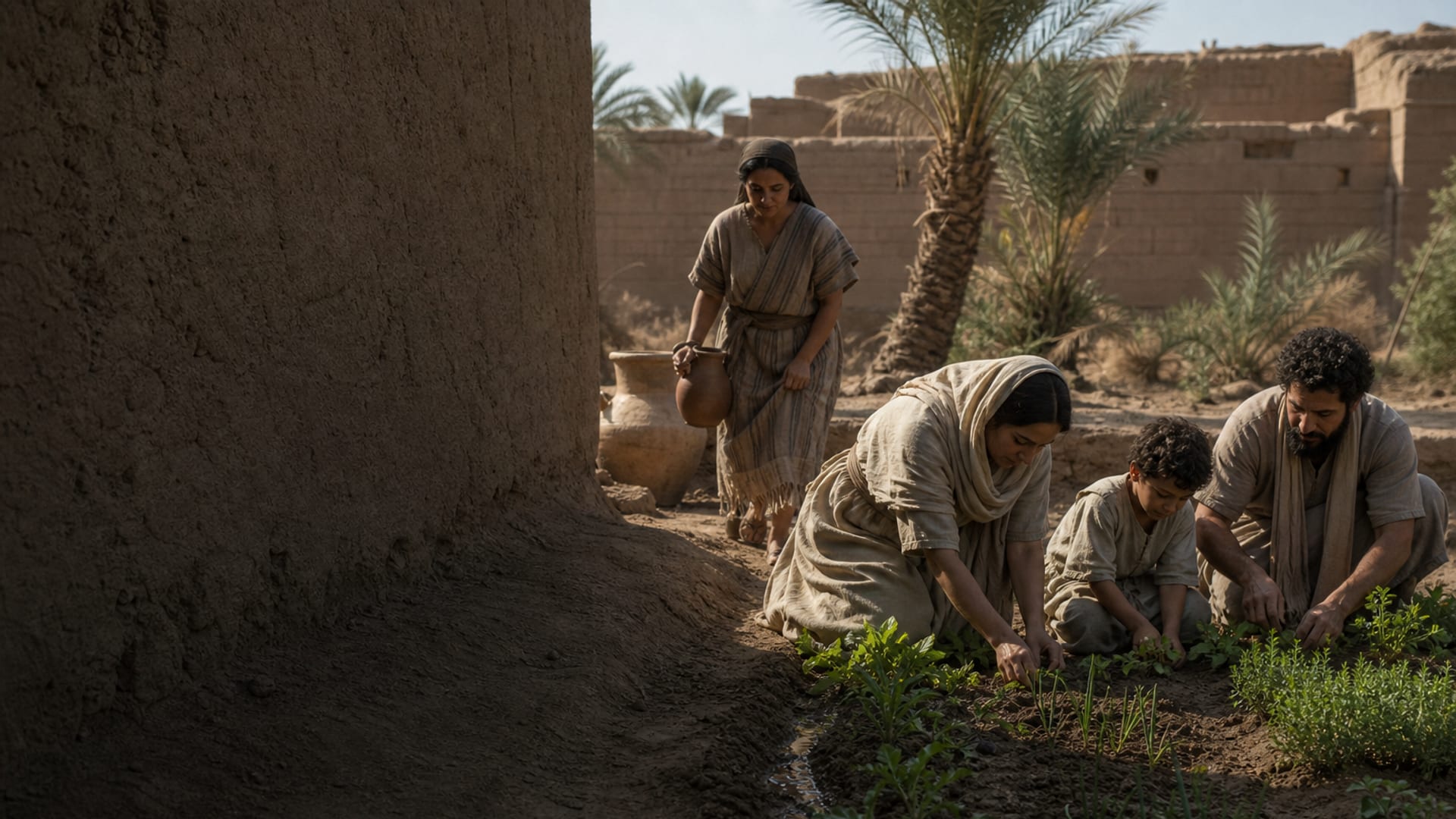
Build houses. Plant gardens. Arrange marriages. Have children and grandchildren. Eat from the ground under your feet. These are long verbs. You do not plant a garden for tomorrow morning. You do not build a house if you expect to leave at sundown. The command pressed the exiles into time.
This did not make Babylon innocent. Later in Scripture, Babylon can become a name for human pride and opposition to God. In Jeremiah 29, however, the exiles are told to live faithfully inside the city that now holds them. Useless waiting would not prove their loyalty to the Lord. Ordered lives under sorrowful providence would.
The chapter holds two truths together. Nebuchadnezzar carried them away, and the Lord says he sent them into that city. That does not erase Babylon’s violence or Judah’s long refusal to listen. It does mean their present place was not outside God’s address. The Lord spoke to them there, and the command was not only to endure the city. They were to seek its prosperity and pray for it.
That sentence must have landed hard. Babylon’s welfare was not an abstract civic project. It meant the welfare of people whose empire had taken them from Jerusalem. Yet God tied their good to the city’s good for now. If the city starved, they would starve. If the city unraveled, their children would live in the unraveling. Prayer on Babylon’s behalf was not approval of everything Babylon was. It was obedience in the actual conditions God had named.
Faith without pretending
Jeremiah does not ask them to call Babylon Jerusalem. The same chapter says the exile has a measured length: seventy years, then the Lord will attend to his people and restore them. Their houses in Babylon were real, and temporary. Their gardens mattered, though they were planted in soil that did not feel like home.
That matters because there were other voices in the room. The next verses warn the exiles against being deceived by prophetic voices that claimed the Lord’s authority for a lie. False hope can sound very spiritual when it refuses the length of a season. It can promise quick rescue in a way that makes ordinary obedience seem like compromise.
Most of us should be careful with the word exile. Jeremiah is writing to a people carried away by an empire in a covenant crisis. Still, the passage teaches us how faith can look when we are living somewhere we would not have chosen: a city, a job, a household, a season of limits. The Lord may not be calling us to love the circumstance as if it were harmless. He may be calling us to stop treating the people inside it as interruptions to the life we wish we had.
To pray for a place is to stop speaking of it only with contempt. It means saying its name before God with the names of real neighbors, officials, and children attached. To seek its welfare might mean doing your work in a way that blesses people you do not agree with, caring about local decisions, or serving quietly where gratitude is thin.
Exile faithfulness is neither denial nor paralysis. It plants because God said the season will be long enough for roots. It prays because even a hard place is still a place where the Lord hears his people. And it waits for restoration without despising the obedience assigned to today.
For reflection
- What part of your present situation have you treated only as a waiting room, though obedience there has real names and needs attached to it?
- Who in your city, workplace, or household could you honestly name before God this week for their good?
Prayer
Lord, teach me to live faithfully in the place I did not choose.
Make my prayers for its welfare honest, patient, and useful.
Amen.
In Jeremiah 29, faithfulness meant seeking the city’s welfare while waiting for God’s promised restoration.
Sources and notes
Consulted while writing this piece. Nothing is listed here that was not used.
- Berean Standard Bible, Jeremiah 29:4–7 primary text
Scripture in English is from the Berean Standard Bible, placed in the public domain by its publisher on 30 April 2023.