
Devotional
What Is Not Bread
Isaiah 55 opens like a market cry with the prices taken off, and then asks a question about everything we have been paying for instead.
Scripture Isaiah 55:1–3 · Isaiah 55:6–7 · Genesis 42:3 · John 7:37 · John 6:35
“Come, all you who are thirsty, come to the waters; and you without money, come, buy, and eat!”
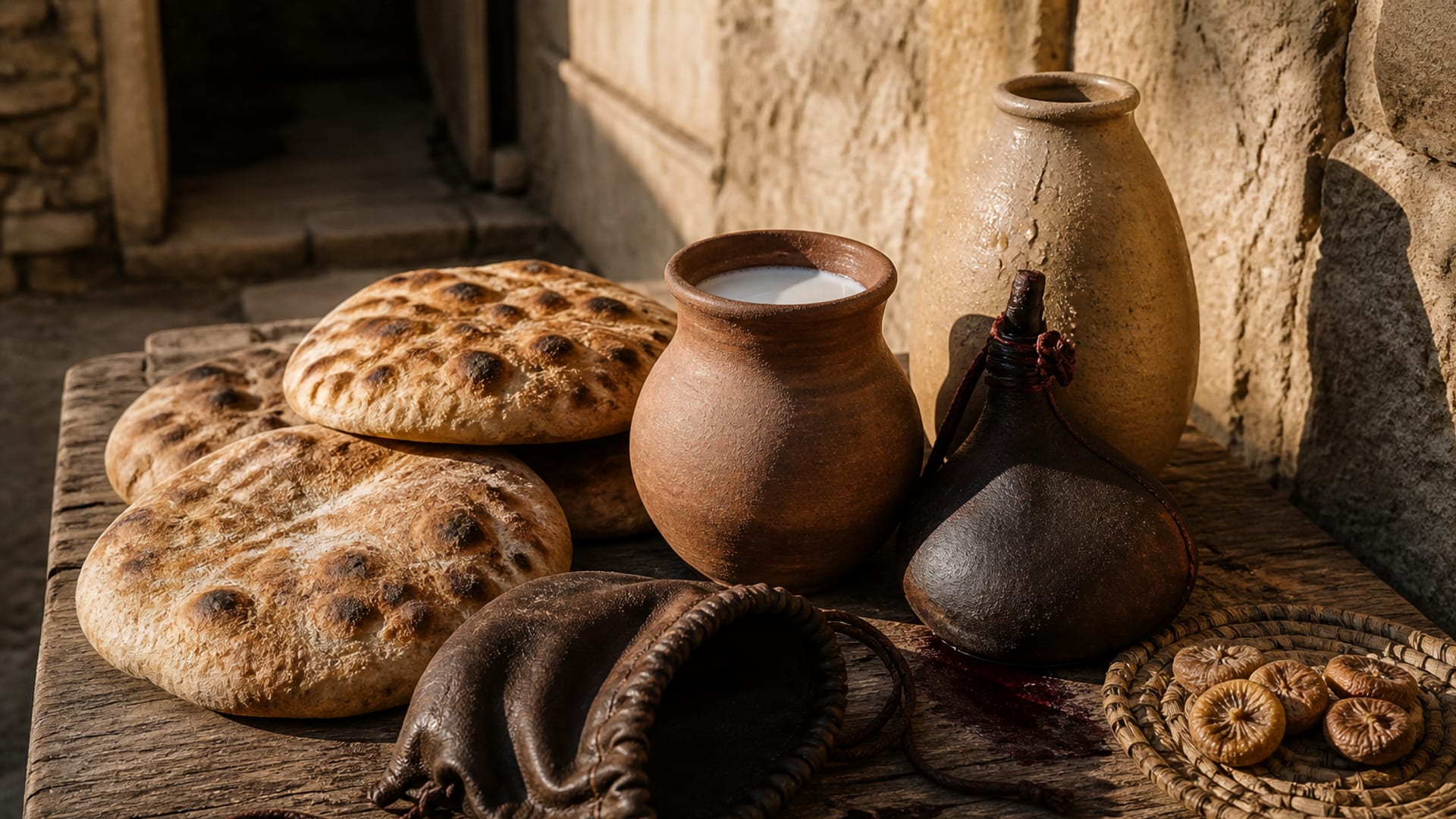
Read it aloud and it sounds like someone calling out in a market. Come, come, buy, eat. You can almost hear the stalls. Then the sentence goes somewhere no market has ever gone: “Come, buy wine and milk without money and without cost!”
Water would be generous enough. Wine and milk are more than survival. They are the kind of thing you set out when you are glad someone came.
Buying with nothing
The verb Isaiah uses for “buy” is an ordinary, practical one. It is the word Genesis uses when ten of Joseph’s brothers “went down to buy grain from Egypt” in a famine. It belongs to people who are hungry enough to travel, bargain and carry sacks home.
So the invitation keeps the shape of a transaction and removes the one thing a transaction needs. You still come. You still take something home. You simply have nothing to hand over, and nothing is asked.
That is harder to accept than it looks. Paying lets us feel we have a right to what we got. A gift puts us in someone’s debt, or worse, in someone’s care. Some of us would rather go on paying for poor food than sit at a table we did not earn.
The question in verse 2
“Why spend money on that which is not bread, and your labor on that which does not satisfy?”
I notice that God does not scold anyone for being hungry. Thirst is the qualification in verse 1. The problem in verse 2 is where the hunger has been taking us, and how much it has cost.
Everyone can fill in their own list, and the list is rarely scandalous. The extra hours worked for approval from someone who will never give it. The purchase that was supposed to settle something and settled nothing. The long evening on a screen that left me emptier than when I started. None of it is evil in itself. It just is not bread. I keep paying, and I keep coming away hungry, and the strange thing is that I keep going back to the same stall.
The food turns out to be listening
Watch what happens to the meal as the verses go on. “Listen carefully to Me, and eat what is good, and your soul will delight in the richest of foods.” Then: “Incline your ear and come to Me; listen, so that your soul may live.”
By verse 3 the food and the listening have become the same thing. God is not pointing past himself to a banquet somewhere else. “Come to Me.” The richest food on offer is his voice and his company, and the only way to eat it is to lean in and hear.
Then comes a promise: “I will make with you an everlasting covenant.” It is tied to “My loving devotion promised to David.” Chapters 40 to 55 of Isaiah speak comfort to Jerusalem after judgment, and most scholars read them as addressed to Judeans who had gone through the exile in Babylon, when there was no son of David on any throne. To people like that, the promise to David might have sounded like an old story. God says it still stands, and now it is extended to “you,” the thirsty ones with no money.
Where the invitation goes
The same call keeps sounding. A few verses later: “Seek the LORD while He may be found.” Centuries later, at a feast in Jerusalem, Jesus stood and cried out, “If anyone is thirsty, let him come to Me and drink.” In John 6 he says, “I am the bread of life.”
Christians read these as the same invitation spoken again, now with a face. The price is still off. The table is still his.
For today
You do not need to empty out your life to answer Isaiah 55. Begin with one honest question: what have I been paying for that is not bread? Name it, without making a speech about it.
Then do the small thing the passage keeps asking. Incline your ear. Open the Scriptures, or sit still, or pray one plain sentence, and listen longer than is comfortable.
“Listen, so that your soul may live.” There is nothing to pay at this table. That is exactly why it is so hard for some of us to sit down.
For reflection
- Where am I spending money, labor or attention on something that has never once filled me, and still expecting it to?
- What would it look like this week to incline my ear and simply come?
Prayer
Lord, I have paid a great deal for things that were not bread. I am tired of it.
I have nothing to bring to your table. Let me come anyway, and listen, and live.
Amen.
The meal in Isaiah 55 has no price because it is not really a meal. It is God himself, speaking, and the only way to eat is to listen.
Sources and notes
Consulted while writing this piece. Nothing is listed here that was not used.
Scripture in English is from the Berean Standard Bible, placed in the public domain by its publisher on 30 April 2023.