
Devotional
The God Who Sees
A pregnant slave runs into the desert, and it is she, not Abram, who ends up giving God a name.
Scripture Genesis 16:7–14 · Genesis 16:8 · Genesis 16:13
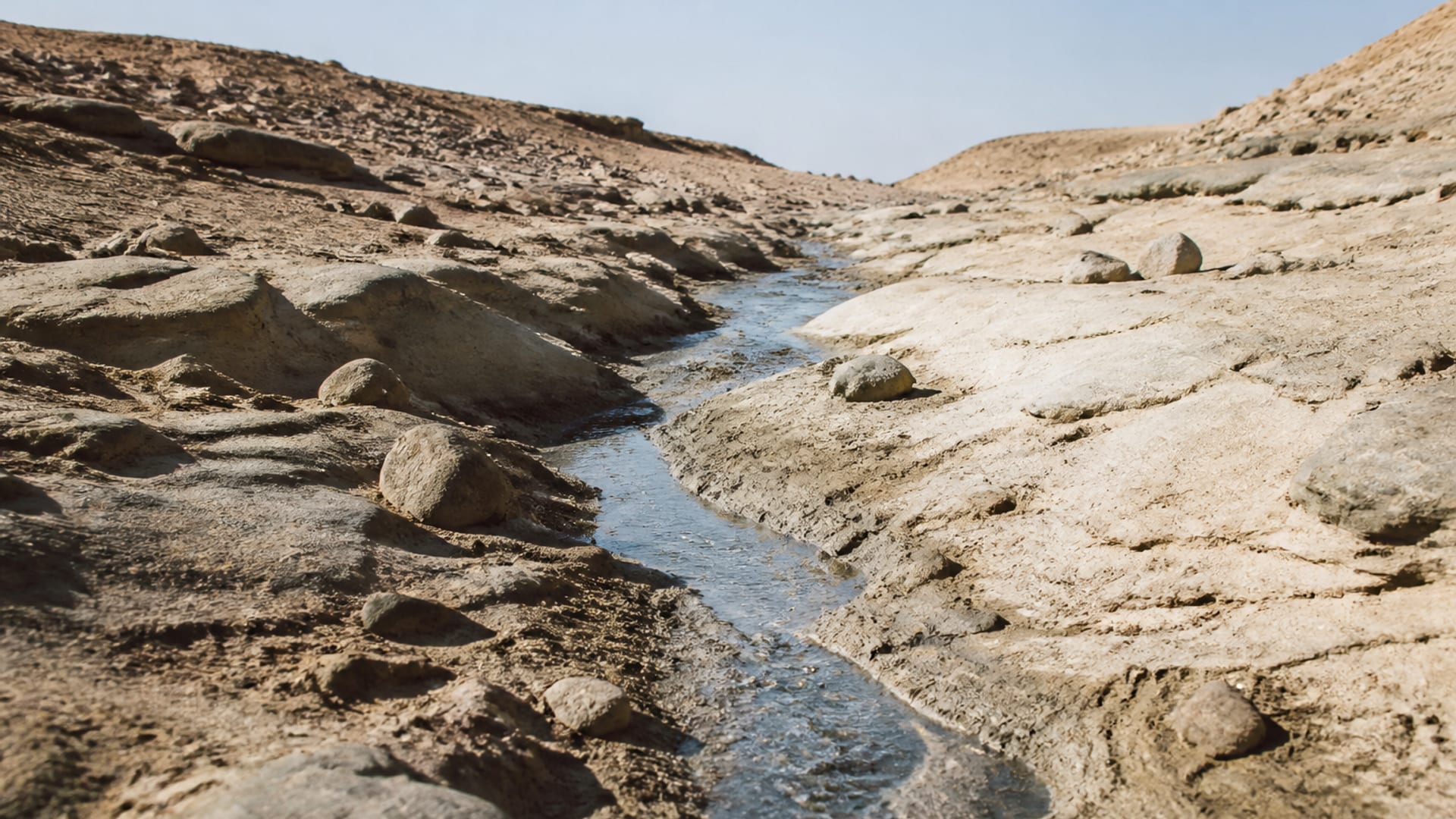
Now the angel of the LORD found Hagar by a spring of water in the desert, the spring along the road to Shur.
Everything about that sentence is worth slowing down for.
Hagar is Egyptian, and a slave, and pregnant, and running. The road to Shur runs south and west, toward Egypt. She is not wandering. She is going home, which is the only direction available to a person with no standing anywhere else.
And the verb is found. Nobody in this story is looking for God. She is looking for water and a border. He finds her.
The question she only half answers
“Hagar, servant of Sarai, where have you come from, and where are you going?”
Notice that he uses her name. In the preceding verses she has mostly been described by her function. Sarai speaks about her rather than to her, and Abram’s reply treats her as a household matter to be settled. Out here, alone, the first thing that happens is that someone says her name.
Then she answers, and she answers only half.
“I am running away from my mistress Sarai.”
She knows exactly what she is running from. She has nothing to say about where she is going, because there is nothing to say. That is what flight looks like from the inside. The destination is not a plan; it is simply away.
The name of the boy
The angel tells her she will have a son and gives her the name to use. Ishmael, and Genesis supplies the reason immediately: the LORD has heard your cry of affliction.
There is no record in the previous scene of Hagar crying out. Nobody wrote it down and nobody in the household appears to have noticed. The name she is told to give her son is a permanent statement that it was heard anyway.
Every time she says the boy’s name for the rest of her life, she will be saying that.
What is not softened
Honesty requires saying that this passage contains a hard instruction. She is told to return and to submit. Genesis does not explain it, does not soften it, and does not tell us how she felt walking back.
It is a passage about a woman in a situation with very few options being met by God inside it, rather than being lifted out of it. That is uncomfortable, and pretending otherwise would be a different kind of dishonesty.
She names him
Then the moment the chapter has been building toward.
So Hagar gave this name to the LORD who had spoken to her: “You are the God who sees me,” for she said, “Here I have seen the One who sees me!”
A foreign slave woman, alone in the desert, gives God a name. She is not a patriarch. She is not part of the covenant line. She has no standing in the household she is running from, and Genesis records her doing something none of the men in the surrounding chapters do.
The name she chooses is not about power or holiness. It is about attention. You are the God who sees me.
For today
Being seen and being rescued are not the same thing, and this chapter refuses to confuse them. Hagar’s circumstances do not improve much. She goes back.
What changes is that she now knows something she did not know at the start of the day: that in the place where she was least visible, she had been the subject of someone’s attention the whole time.
If you are somewhere nobody is really looking, that is the promise available in this passage. Not that the road turns, necessarily. That you were found on it.
Prayer
God, you have seen the part of this that nobody else has looked at.
Where I am running and cannot say where to, find me there.
Amen.
She is asked where she is going and cannot answer. She is met anyway, by name, at a spring on the road out.
Scripture in English is from the Berean Standard Bible, placed in the public domain by its publisher on 30 April 2023.