
Devotional
The Former Things Were His Too
Isaiah tells exiles to forget the former things. Two verses earlier he says what those former things are.
Scripture Isaiah 43:18–19 · Isaiah 43:16–17 · Isaiah 43:20–21
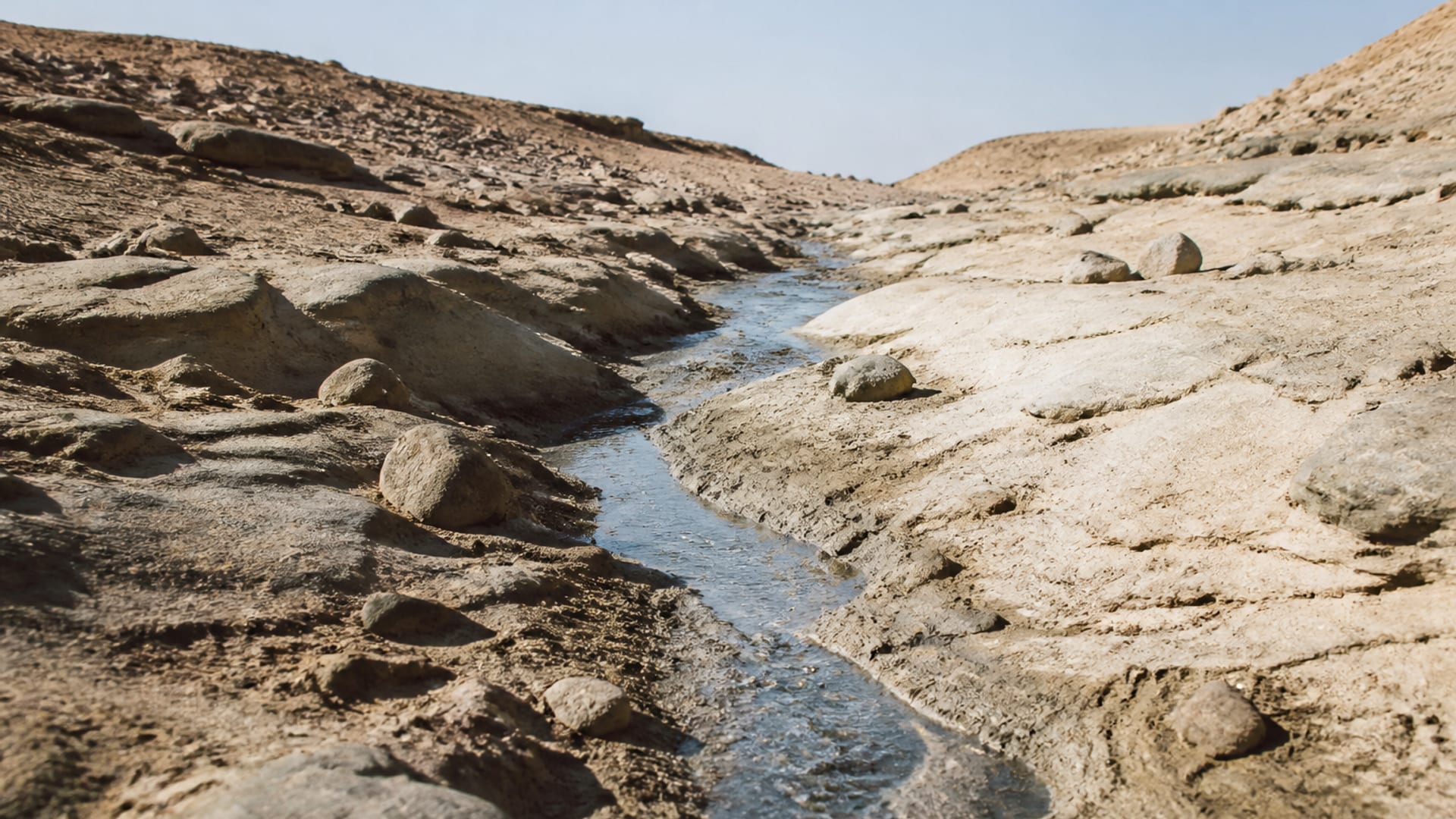
Do not call to mind the former things; pay no attention to the things of old. Behold, I am about to do something new; even now it is coming. Do you not see it? Indeed, I will make a way in the wilderness and streams in the desert.
This passage has been used, gently and with good intentions, to tell people to put their past behind them. Forget what happened. Stop looking back.
Read the two verses immediately before it and that reading collapses.
What the former things actually are
Verses 16 and 17 describe the LORD who makes a way through the sea, a path through mighty waters, who brings out chariot and horse and army together and leaves them lying down, never to rise, snuffed out like a wick.
That is the exodus. The parting of the sea. The defining act of God in Israel’s memory, the thing every festival rehearsed and every generation was commanded to tell its children.
Then, in the very next breath: do not call to mind the former things.
He is not talking about your regrets. He is talking about his own greatest recorded work, and he is saying it is about to be outclassed.
Which makes it a bigger promise
The exiles in Babylon had exactly one category for divine rescue, and it was four hundred years old. Their hope was archival. God says the new thing will be large enough that the old benchmark will stop being useful.
Then he gives the image, and it is precisely calibrated: a way in the wilderness, streams in the desert. At the exodus he made dry land appear in the middle of water. Now he will make water appear in the middle of dry land. The same God, working in the opposite direction, because the need is different.
Who the new thing is for
The sentence does not stop at the streams in the desert.
Verses 20 and 21 carry on: the wild animals will honour him, the jackals and the ostriches, because he provides water in the wilderness to give drink to his chosen people, the people he formed for himself, that they might declare his praise.
The new thing is for a people. It is corporate before it is personal, and it has a purpose beyond the relief of those who receive it.
That is worth holding when a passage like this is applied to a private new start. The promise is not that your circumstances will improve. It is that God is still acting in history on behalf of a people he intends to gather, and that a person beginning again is stepping back into something considerably larger than their own timeline.
Beginning again, honestly
This is why the passage is a better text for new beginnings than the sentimental version.
You are not asked to pretend yesterday did not happen. Israel never forgot the exodus; they were still telling that story centuries later, and Isaiah himself has just retold it. What they were asked to stop doing was using it as the ceiling.
If you are starting something again, the honest form of hope is not amnesia. It is a refusal to assume that what God has already done for you is the most he intends to do.
You are not asked to erase your history. You are asked to stop treating the last rescue as the largest one available.
Scripture in English is from the Berean Standard Bible, placed in the public domain by its publisher on 30 April 2023.