
Bible Study
The Stairway in the Night
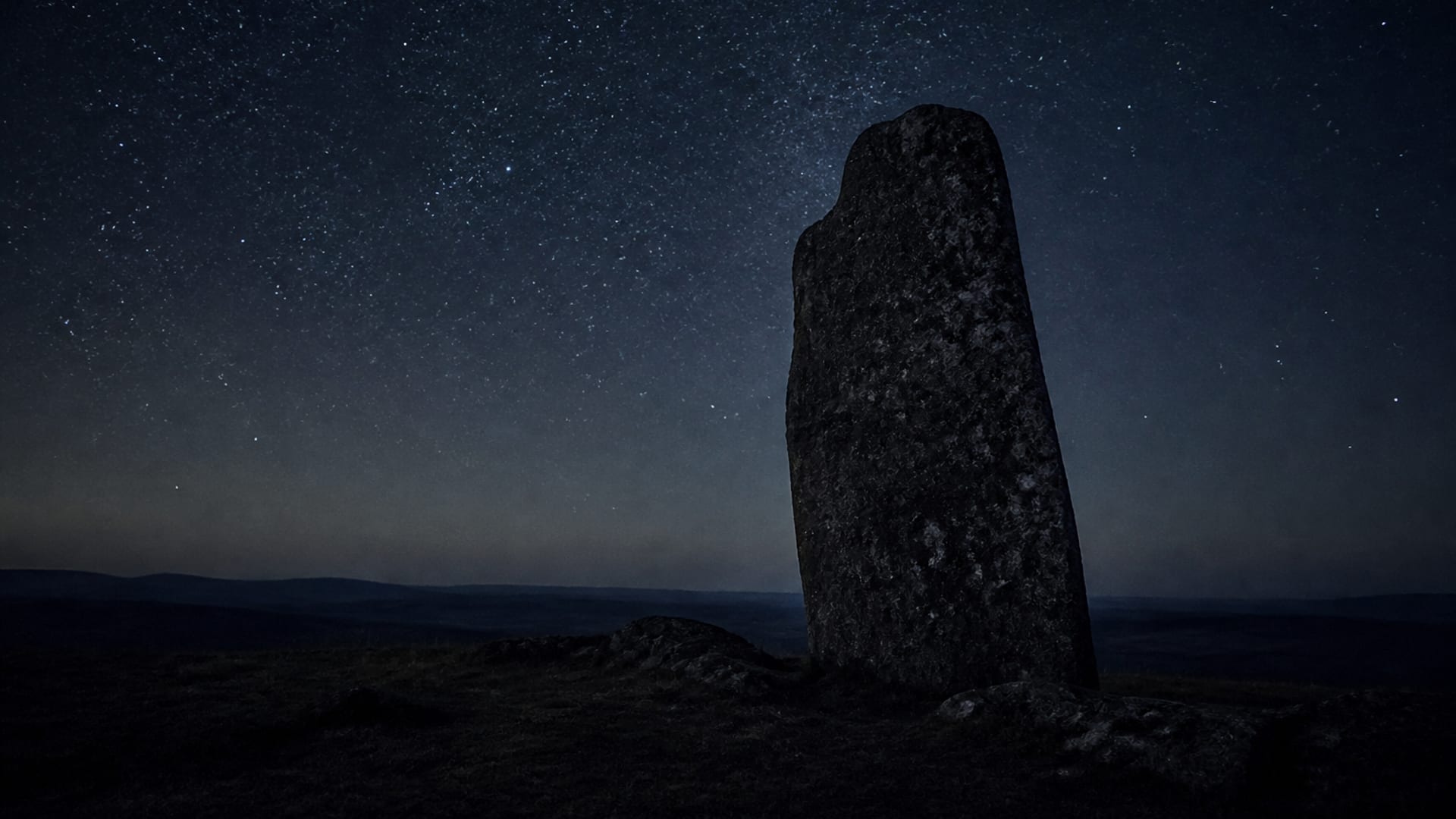
Jacob went to sleep with a stone near his head and woke up realizing that the place he considered ordinary had become a place of encounter.
Scripture Genesis 28:10–22 · John 1:51
Jacob’s famous dream does not happen when his life is settled.
It happens while he is leaving.
Behind him is conflict. Ahead of him is uncertainty. He is traveling toward a future he cannot control, carrying a family story that is already complicated.
Then night comes.
Genesis says Jacob takes a stone from the place, settles down, and sleeps.
There is something almost severe about the scene. No palace. No sacred building. No carefully prepared spiritual atmosphere.
Just a traveler, the ground, a stone, and darkness.
And there, Jacob dreams.
He sees a stairway or ramp set on the earth with its top reaching toward heaven. God’s messengers are ascending and descending. Above it, the Lord speaks.
The scene has become so familiar in Christian imagination that it is easy to miss what is happening.
Jacob is not climbing.
God is revealing.
That may be the first thing we need to notice.
1. The encounter begins with God
Jacob is not presented as a spiritual hero earning access to heaven.
He is asleep.
The movement in the passage begins with God’s revelation and promise.
God identifies Himself with Abraham and Isaac. He repeats the covenant promises concerning land, descendants, blessing, presence, and return.
Then comes one of the most tender lines in the passage: God promises to be with Jacob and to keep him wherever he goes.
Jacob’s future is uncertain to Jacob.
It is not uncertain to God.
This does not mean the road ahead will be easy. Jacob will experience years of complexity, conflict, work, family tension, and transformation.
Presence is not the promise of an uncomplicated life.
It is the promise that he will not walk that life alone.
2. Heaven is nearer than Jacob thought
When Jacob wakes, he says that the Lord was in that place and he did not know it.
That sentence carries enormous spiritual weight.
How many places do we label “ordinary” because nothing dramatic is happening?
A kitchen early in the morning.
A hospital waiting room.
A long drive.
A hotel room.
A season of transition.
A night when you do not know what comes next.
Jacob learns that God is not restricted to the places he expected to find Him.
The ground did not become holy because Jacob felt spiritual.
Jacob discovered that God had been present before he understood what was happening.
3. The gate of heaven
Jacob calls the place Bethel, which means house of God, and speaks of the gate of heaven.
The phrase gives us part of the imagery that runs through this publication: thresholds, open heaven, ladders, doors, places where the earthly and heavenly meet.
But the biblical point is not that Jacob discovered a magical location.
The point is revelation.
God met a man on the road and redefined the place by His presence.
4. Jesus returns to the image
The Gospel of John later uses strikingly similar language.
In John 1:51, Jesus speaks of heaven opened and the angels of God ascending and descending upon the Son of Man.
Christians have long recognized the connection with Jacob’s dream.
The direction becomes clearer: access between heaven and earth is not finally about a sacred staircase that humans learn to climb.
It is centered in Christ.
Jesus is not merely pointing toward the way.
He is the meeting place.
The dream at Bethel becomes part of a much larger biblical story: God makes Himself known, God comes near, and in Christ the distance we could not overcome is crossed by God Himself.
5. We often want a map. God gives presence.
Jacob is traveling because his life is unstable.
If I were writing the scene according to my instincts, I might want God to give him a detailed itinerary.
Here is what will happen.
Here is how long it will take.
Here is what to avoid.
Here is the exact day you will return.
Instead, God gives promise and presence.
“I am with you.”
There are seasons when this is the word we need, even when it is not the word we would have chosen.
We ask for explanation.
God gives Himself.
We ask for certainty.
God gives enough light for the next faithful step.
6. The stone becomes a marker
After waking, Jacob takes the stone and sets it up as a pillar.
The object that belonged to the hardship of the night becomes part of the memory of encounter.
That does not mean every painful thing becomes beautiful.
It means God can attach remembrance to places we would otherwise only associate with fear.
A stone can remain a stone and still become a marker:
God met me here.
I was not alone here.
I did not understand it then, but God was not absent.
For reflection
- Where in my life have I assumed God is absent because the place feels ordinary?
- Am I trying to climb toward God through effort, image, or performance?
- What changes if I receive Christ as the One who brings heaven near?
- What uncertain part of my future needs the promise, "I am with you"?
- Is there a "stone" from a difficult season that has become a marker of God's faithfulness?
Prayer
God, open my eyes to Your presence in places I have called ordinary.
When I do not know what comes next, keep me from confusing uncertainty with abandonment.
Thank You that I do not have to build my own ladder to heaven.
Teach me to trust Christ, to remember Your presence, and to walk faithfully into the next part of the road.
Amen.
Jacob wanted a place to sleep. God gave him a place to remember.