
Devotional
Eight Days Later
Thomas asked to see what the others had already been shown. He waited a week inside the same locked room, and Jesus came back with his own words.
Scripture John 20:24–29 · John 20:19–20 · John 20:18 · Luke 24:11 · John 11:16 · John 14:5 · John 20:30–31
Now Thomas called Didymus, one of the Twelve, was not with the disciples when Jesus came.
John does not say where he was. People have guessed: grief, fear, a need to be alone after Friday. The text leaves it open, and so should we. What we do know is that Thomas missed the evening that changed everyone else in the room.
He asked for what they had been given
When he came back, the others told him, “We have seen the Lord!”
It is almost word for word what Mary Magdalene had told them that same morning: “I have seen the Lord!” John does not record the disciples believing her and rushing out. They were still behind locked doors that evening. Luke is blunter. When Mary Magdalene and the other women came back from the tomb, their words “seemed like nonsense to them.”
So look at the rest of the evening in verse 20. Jesus came and stood among them, and “He showed them His hands and His side. The disciples rejoiced when they saw the Lord.” They saw the wounds, and then they rejoiced.
Thomas said, “Unless I see the nail marks in His hands, and put my finger where the nails have been, and put my hand into His side, I will never believe.”
It is a hard sentence, and “I will never believe” is not a small thing to say. But set it next to verse 20 and it is not a strange request. He was asking for what the others had already been given. He wanted what they got.
Who Thomas was before this
The nickname “Doubting Thomas” has stuck for centuries, and it flattens a man John took some care to draw. When Jesus decided to go back toward Judea, where people had recently tried to stone him, it was Thomas who said, “Let us also go, so that we may die with Him.” At the last supper, when Jesus spoke of going away, it was Thomas who admitted it: “we do not know where You are going, so how can we know the way?”
That is a brave man and an honest one. He did not pretend to understand what he did not understand. On the Sunday Jesus rose, he did not pretend to believe what he had not seen.
A week in the room
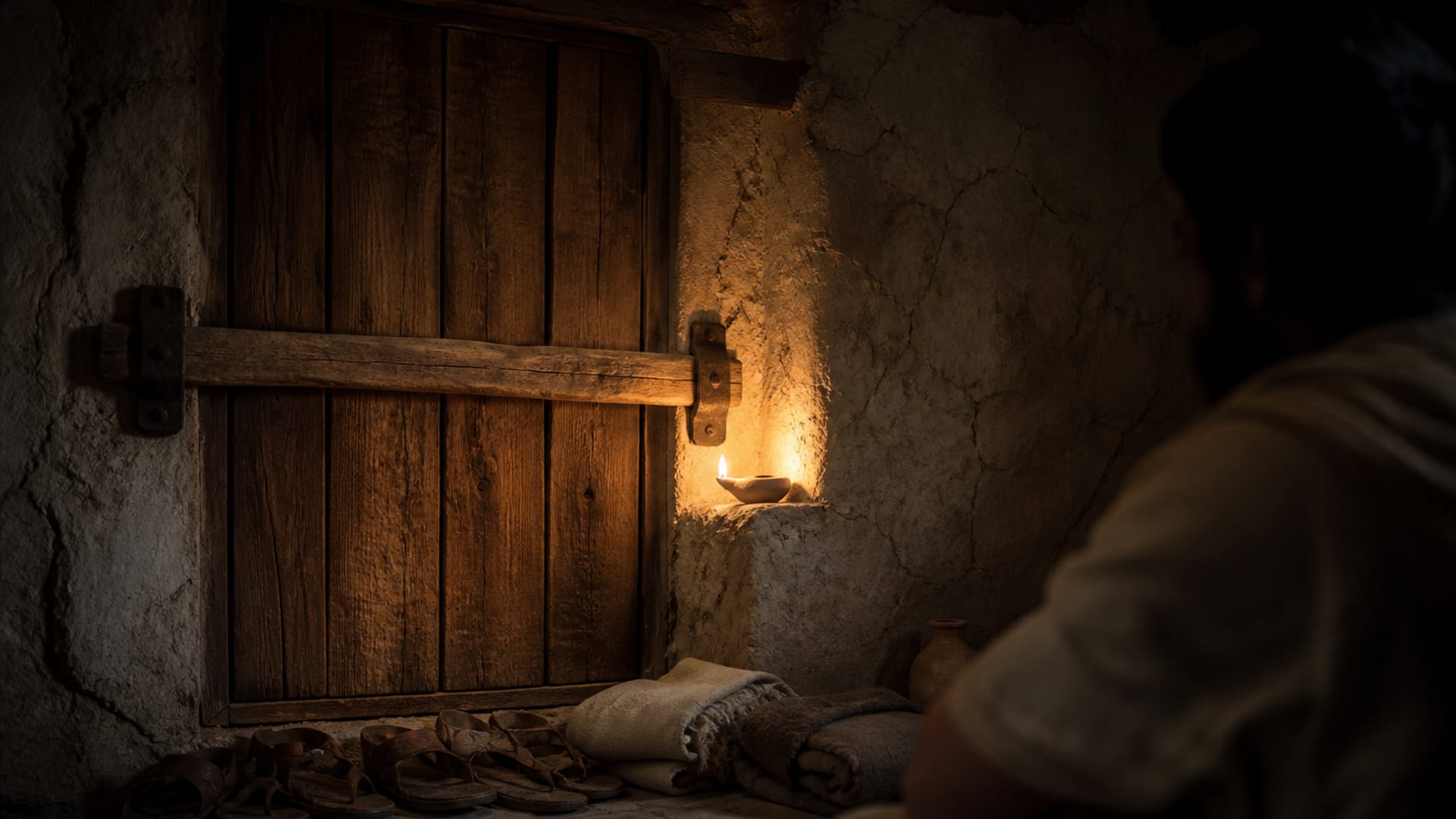
“Eight days later, His disciples were once again inside with the doors locked, and Thomas was with them.”
That line is easy to skim. For a week Thomas was the one person in that group who could not say what all the others were saying. He did not leave. And, as far as we can tell, they did not send him away. Whatever those days were like, the community held a man who was not there yet, and he stayed.
Jesus came back with Thomas’s words
Jesus came and stood among them as before, and said, “Peace be with you.” Then he turned to one man.
“Put your finger here and look at My hands. Reach out your hand and put it into My side.”
Finger, hands, hand, side. He answers Thomas in Thomas’s own terms, item by item. Thomas had spoken those words when, as far as he knew, Jesus was nowhere near. Jesus had heard them anyway, and he did not come back to argue. He came back offering exactly what had been demanded.
Then, “Stop doubting and believe.” The Greek is more literally “do not be unbelieving, but believing,” two forms of the same root. It is an invitation spoken while the hands are still held out.
John never says Thomas touched him. What he records is the answer: “My Lord and my God!” The Gospel opened by saying “the Word was God,” and here, near its end, the man with the famous nickname is the first in the story to say it straight to Jesus’ face.
For those who come later
“Blessed are those who have not seen and yet have believed.”
That is us. It is less a rebuke to Thomas than a word to every reader after him, and John immediately says why he wrote: “so that you may believe.” Thomas got to see the hands. We get Thomas, and the others, and a Gospel written for people in exactly his position.
If you are the one in the room who cannot yet say what everyone else is saying, stay in the room. Say your honest sentence to God. He has heard harder ones, and he came back for the man who said one.
For reflection
- Is there someone in my circle who is still in the room but not yet able to say what the rest of us say? How am I treating them this week?
- What have I told God I would need before I could believe, and am I willing to say it to him as plainly as Thomas did?
Prayer
Lord Jesus, you heard what Thomas said when you were not visibly there. You hear me too.
Keep me in the room while I wait, and come to me as you came to him.
Amen.
Jesus did not come back to shame Thomas. He came back quoting him, and gave him exactly what he had asked for.
Sources and notes
Consulted while writing this piece. Nothing is listed here that was not used.
Scripture in English is from the Berean Standard Bible, placed in the public domain by its publisher on 30 April 2023.