
Devotional
When God Changes the Route
Paul was already on the road when it closed, twice. Luke never says how it happened, and he never says Paul stopped walking.
Scripture Acts 16:6–10 · Acts 15:36 · Proverbs 16:9 · Isaiah 30:21 · 2 Corinthians 2:12–13
After the Holy Spirit had prevented them from speaking the word in the province of Asia, they traveled through the region of Phrygia and Galatia. And when they came to the border of Mysia, they tried to enter Bithynia, but the Spirit of Jesus would not permit them.
Most of us read straight past these sentences on the way to the vision in Troas. Yet this is where many people actually live: between a plan that made sense and a door that will not open.
Paul had a good plan
The journey started with Paul saying to Barnabas, a chapter earlier, “Let us go back and visit the brothers in every town where we proclaimed the word of the Lord, to see how they are doing.” Nobody would call that self-will.
After that he wanted to preach in Asia, the Roman province on the western coast of what is now Turkey, with Ephesus as its great city. Also a good plan.
He was prevented. Luke does not say how. It may have been a prophetic word, a circumstance, an illness. The text is silent, and it is worth resisting the urge to fill that silence with the method we would prefer God to use.
So they turned north toward Bithynia, another reasonable choice. Again the way closed.
They kept walking
Paul did not answer the first closed road by sitting down in Galatia until he was certain. He adjusted and kept moving, using the judgment he had. The direction came to a man already on the road.
Some of us are not confused because God is silent. We are standing still because we are afraid of choosing badly, and we have started calling that fear waiting on the Lord. Scripture does describe a holy kind of waiting, but there is also a paralysis that only looks spiritual. Paul’s example points to a different posture: make the most faithful decision you can see, and hold it loosely enough to be interrupted.
Proverbs says it in one line: “A man’s heart plans his course, but the LORD determines his steps.” The proverb assumes we will plan.
A closed door is not always a no
It would be easy to turn this passage into a rule that whenever something becomes hard, God is saying no. Paul’s own life will not allow it. He was beaten and shipwrecked and kept going. Some resistance calls for perseverance.
An open door is not automatically a yes either. Years later Paul wrote about arriving in Troas, the same port in this story, where “a door stood open for me in the Lord.” He left anyway, because he had no peace and wanted to find Titus in Macedonia.
So circumstances alone do not settle the question. Acts 16 is also unusual: Luke says plainly that the Spirit prevented them, and a vision followed. Most of our decisions will not come with that clarity, and it is more honest to admit it than to treat every setback as a message.
What we do have is ordinary and demanding. Scripture, read carefully and in context. Prayer that includes listening. Wisdom. The counsel of people mature enough to tell us what we would rather not hear. An honest look at our own motives and character. Circumstances, weighed without superstition.
The night in Troas
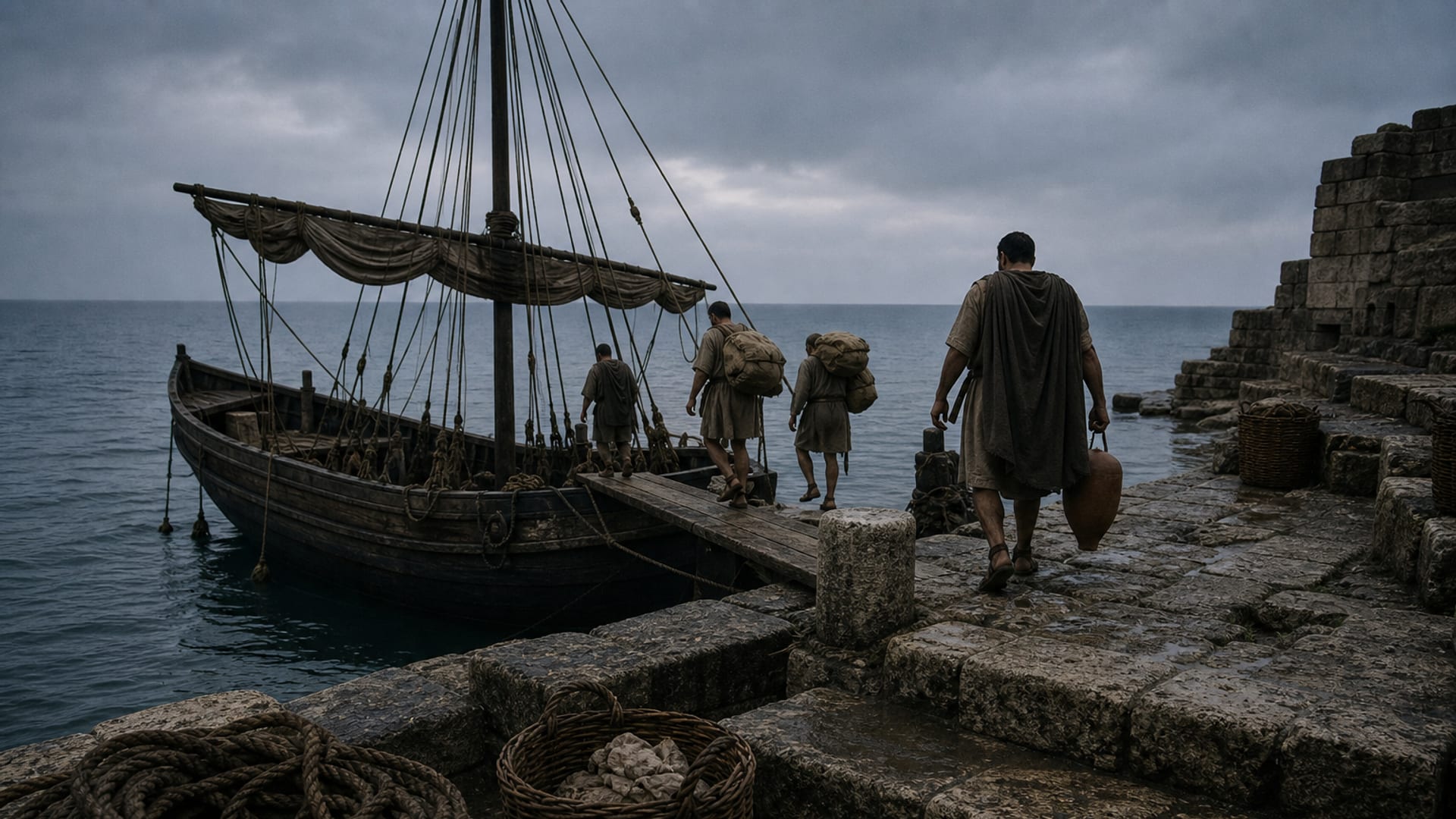
Troas was a port on the Aegean. After two closed roads, Paul reached the edge of the map he had in mind, and that night he saw a man of Macedonia pleading with him, “Come over to Macedonia and help us.”
Luke’s next sentence is worth reading slowly: “As soon as Paul had seen the vision, we got ready to leave for Macedonia, concluding that God had called us.” The word behind concluding describes putting things together. Even with a vision in hand, they reasoned about what it meant as a group, and then they left at once.
Notice too what the closed roads turned out to be. Asia was not refused forever. A few years later Paul spent two years in Ephesus, and Luke reports that everyone who lived in the province of Asia heard the word of the Lord. Bithynia was not forgotten either. Peter’s first letter is addressed to believers living there. The route changed; the mission did not shrink.
The harder question
Through Isaiah, God promised a people who had chosen their own way that they would one day hear a voice behind them: “This is the way. Walk in it.” The promise assumes we are willing to walk once we hear.
Some of our confusion may not be a lack of direction at all. The direction may be getting clearer, and it may not be the one we wanted. A relationship we hoped would continue. A job we assumed we would keep. A move we keep postponing. A ministry we built our identity around.
So sit honestly with this: if God made the direction completely clear today, and it was different from the answer you wanted, would you still call it guidance?
Paul wanted Asia. He got a sea crossing to a Roman colony he had not planned to visit, and the first church Luke records on that side of the water began with a few women gathered to pray by a river outside Philippi.
For reflection
- Where am I calling fear of choosing wrongly by a more spiritual name?
- If God made the direction completely clear today, and it was different from what I wanted, would I still call it guidance?
Prayer
Lord, I have made plans, and I think some of them are good. Keep me moving, and keep me interruptible.
Where the way is closing, give me the humility to notice. Where it only feels hard, give me the courage to stay.
Amen.
The guidance in Acts 16 came to people who were already on the road, doing the most faithful thing they could see.
Scripture in English is from the Berean Standard Bible, placed in the public domain by its publisher on 30 April 2023.