
Devotional
Without an Explanation
Job receives the answer of God without receiving an explanation for his losses, and the answer begins by restoring him to his place as a creature before the Maker.
Scripture Job 38:1–7 · Job 38:8–41 · Job 39:1–30
By the time the Lord speaks in Job 38, many words have already passed over Job’s grief. His friends have argued. Job has answered. He has defended his integrity, protested his suffering, and longed to bring his case before God. He is not asking a detached question from a safe distance. He is speaking from the ash heap of loss.
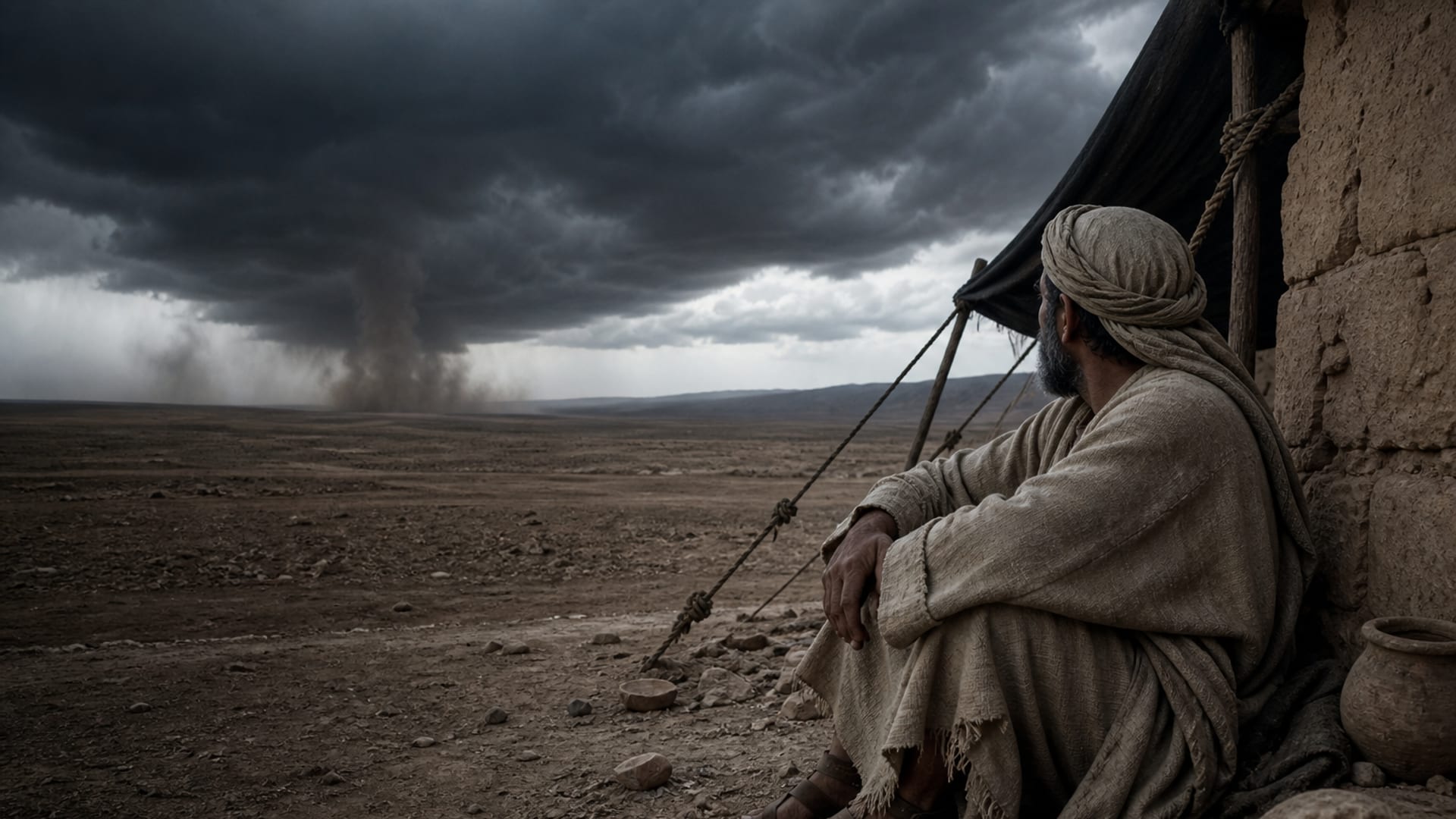
So the opening line lands with weight: the Lord “answered Job out of the whirlwind.” The answer comes, but not in the form Job may have expected. God does not begin with a report on why the disasters happened. He does not hand Job the hidden proceedings behind his sorrow. He gives Job something more immediate and more unsettling: himself, speaking.
A whirlwind is force, motion, danger. Yet it is also the place from which God addresses the man who has been asking for him. The God who needs no permission to remain silent chooses to answer.
A question that restores scale
The first words are searching: “Who is this who obscures My counsel by words without knowledge?” God names a real problem in Job’s speech. Pain has not made Job foolish, and the Lord does not mock his wounds. But Job has spoken beyond what he can see. He has tried to draw conclusions about divine counsel from the narrow window of his suffering.
There is mercy in the rebuke. God does not crush Job for asking. He summons him: “Now brace yourself like a man; I will question you, and you shall inform Me.” The command has dignity in it. Job is addressed as someone who can stand before God and listen. He is humbled, but he is not humiliated.
Then comes the first great question: “Where were you when I laid the foundations of the earth? Tell Me, if you have understanding.” God does not begin in the day Job lost everything. He begins before Job had a day at all. The question is not a request for information. It is a mercy that restores scale.
Job was not there when the earth was founded. Neither were we. That absence is simply what it means to be a creature. We arrive late. We learn in fragments. We suffer things we cannot interpret from the inside. We can tell the truth about our pain, but we cannot see the whole counsel of God.
The next question presses the point through the image of a builder: “Who fixed its measurements? Surely you know! Or who stretched a measuring line across it?” The world is pictured as measured, ordered, and set in place. Its existence is not loose in God’s hands. It has form before Job understands it.
God continues, “On what were its foundations set, or who laid its cornerstone, while the morning stars sang together and all the sons of God shouted for joy?” Before Job’s questions and his friends’ speeches, there was a creation held by wisdom and greeted with joy. Job’s life is not being placed into chaos. His grief is being placed before the Maker of a world whose depths he has never seen.
The mercy of being small
The questions keep widening. God will speak of the sea and the dawn, the depths and the storehouses of snow, the constellations and the wild creatures no human being commands. The speech is not an escape from Job’s suffering. It is a confrontation with the limits of Job’s sight.
Those limits can feel unbearable when we are hurting. We want the sentence that will explain the loss, the betrayal, the unanswered prayer. Sometimes God gives enough light to name a sin, make a repair, or take the next step. Often he does not give the explanation we ask for.
Job 38 does not tell us to call evil good. It does not ask sufferers to pretend that pain is small. It asks us to stop treating our field of vision as if it were the whole sky.
There is a kind of humility that heals because it releases us from an impossible office. We are not asked to manage the universe, defend every hidden purpose, or read the final meaning of our darkest days. We are asked to answer the God who is present. We are asked to let his questions loosen our grip on conclusions we do not have the knowledge to hold.
For an ordinary day, that may mean writing down the accusation against God that has been hardening in your heart, then asking whether you know enough to make it final. It may mean praying with fewer explanations and more honesty: Lord, I do not understand, but I am here before you.
God gives Job presence and perspective without opening the hidden reasons for his suffering. That is not a small gift. When the whirlwind speaks, Job is still suffering, but he is no longer alone with his own account of things. He is standing before the One who laid the earth’s cornerstone, and who can be trusted with what Job cannot see.
For reflection
- What conclusion about God have I been drawing from pain that I may not have enough sight to judge?
- Where do I need to receive God’s presence as a real answer while I wait for understanding?
Prayer
Lord, I have spoken from the smallness of my sight as if I could see the whole.
Meet me with your presence, humble me without crushing me, and teach me to stand before you as your creature.
Amen.
God does not answer Job with reasons for his losses. He answers with himself, and that presence restores Job to the humble mercy of being a creature.
Sources and notes
Consulted while writing this piece. Nothing is listed here that was not used.
- Berean Standard Bible, Job 38:1–7 primary text
Scripture in English is from the Berean Standard Bible, placed in the public domain by its publisher on 30 April 2023.