
Devotional
Streams in the Negev
Psalm 126 remembers a restoration so good it felt like a dream, and then asks God to do it again. It is a song for the long stretch in between.
Scripture Psalm 126:1–6
When the LORD restored the captives of Zion, we were like dreamers.
The psalm begins with a memory, and the memory is almost too good. When the reversal came, it did not feel real. It felt like the kind of dream you wake from and lie still, hoping it was true.
Psalm 126 is one of the Songs of Ascents, the group from Psalm 120 to 134 that many believe pilgrims sang on the way up to Jerusalem. It never says which restoration it remembers. Many readers think of the return from exile in Babylon, and that fits well, but the psalm leaves the event unnamed. Perhaps that is part of why so many generations have been able to sing it.
The Hebrew expression in verse 1 can be read as bringing back captives or as restoring fortunes, and English translations divide over it. Either way it means a great reversal: what was lost came back.
Laughter first
“Then our mouths were filled with laughter, our tongues with shouts of joy.”
Before anyone explained it, before any theology, there was laughter. Then the neighbours noticed. “Then it was said among the nations, ‘The LORD has done great things for them.’”
And the people pick up the outsiders’ sentence and make it their own: “The LORD has done great things for us; we are filled with joy.” The order is worth noticing. In the psalm, the nations say it first. Sometimes we are the last to see what God has done in our own lives.
And then: again
Verse 4 turns without warning. “Restore our captives, O LORD, like streams in the Negev.”
It is the same request, in the same language as verse 1. They are asking for what they have already received.
That is honest. Whatever the first restoration was, it did not finish everything. The people who laughed like dreamers still had dry places, still had people missing, still had fields that had not yet produced. The psalm does not pretend that one great answer settles every need forever. It remembers, and it asks again.
Streams in the dry south
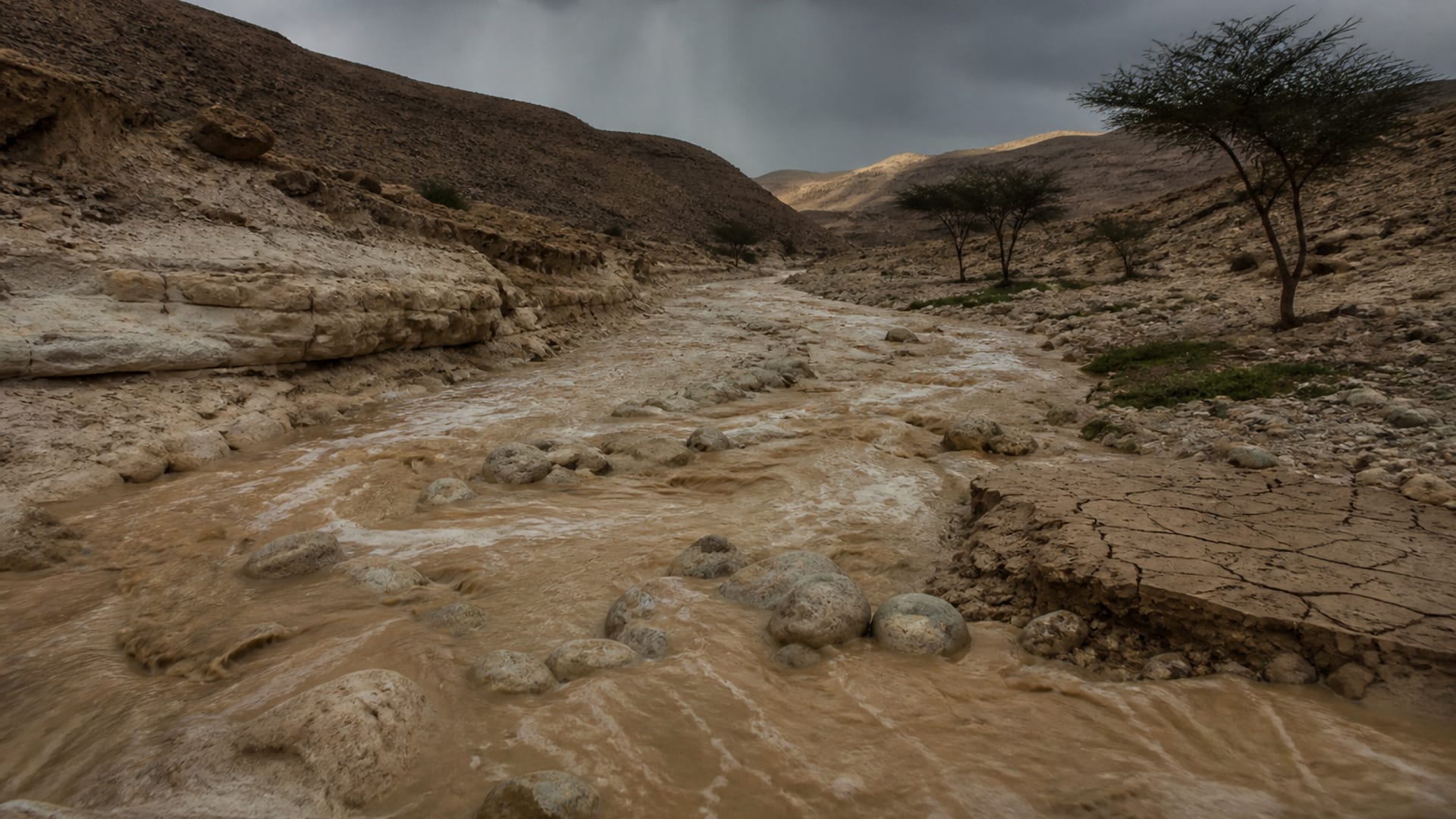
The Negev is the dry land in the south of Israel. Most of the year its streambeds are dust and stones. When winter rain falls in the hills, those channels can fill with running water in hours, sometimes in a sudden rush, and the desert greens after them.
That is the first picture of restoration the psalm offers: sudden, total, a dry wadi one day and a stream the next. The psalmist prays for that, and there is nothing wrong with praying for it.
Seed and tears
Then the psalm gives a second picture, and it is very different. “Those who sow in tears will reap with shouts of joy. He who goes out weeping, bearing a trail of seed, will surely return with shouts of joy, carrying sheaves of grain.”
Sowing is slow. It is work done in faith, months before anything can be seen, and in this psalm it is done while crying. The text does not say why the sower weeps. Anyone who has kept doing the necessary work through grief will not need it explained. You get up. You go out. You put the seed in the ground with wet eyes.
The Hebrew doubles its verbs in verse 6, going and coming, which is where the BSB gets its “surely.” The weeping is real, and the coming home is just as certain.
For today
Most of us live in verse 4, somewhere between a joy we remember and a restoration we are still asking for. The psalm gives language for both. Remember out loud what God has already done; say it, as they did, “The LORD has done great things for us.” Then ask him again, without embarrassment.
And while you wait for the streams, keep sowing. The psalm expects tears in the field. It also expects you to come back from that field with your arms full.
For reflection
- What has God already done for me that I can name the way the psalm names it, "The LORD has done great things for us"?
- Where am I sowing in tears right now, doing the necessary thing while grief is still present?
Prayer
Lord, you have done great things for us, and I remember them. Do it again where things are dry.
Give me strength to keep sowing while I weep, and let me come home carrying something.
Amen.
Psalm 126 holds two pictures of restoration side by side: a dry streambed that fills overnight, and a field that takes a season. It prays for the first and keeps working at the second.
Sources and notes
Consulted while writing this piece. Nothing is listed here that was not used.
Scripture in English is from the Berean Standard Bible, placed in the public domain by its publisher on 30 April 2023.