
Devotional
As He Had Done Before
When the decree was signed, Daniel did nothing new. That is the whole point of the verse.
Scripture Daniel 6:10 · Daniel 6:3–5 · 1 Kings 8:46–49 · Daniel 9:2
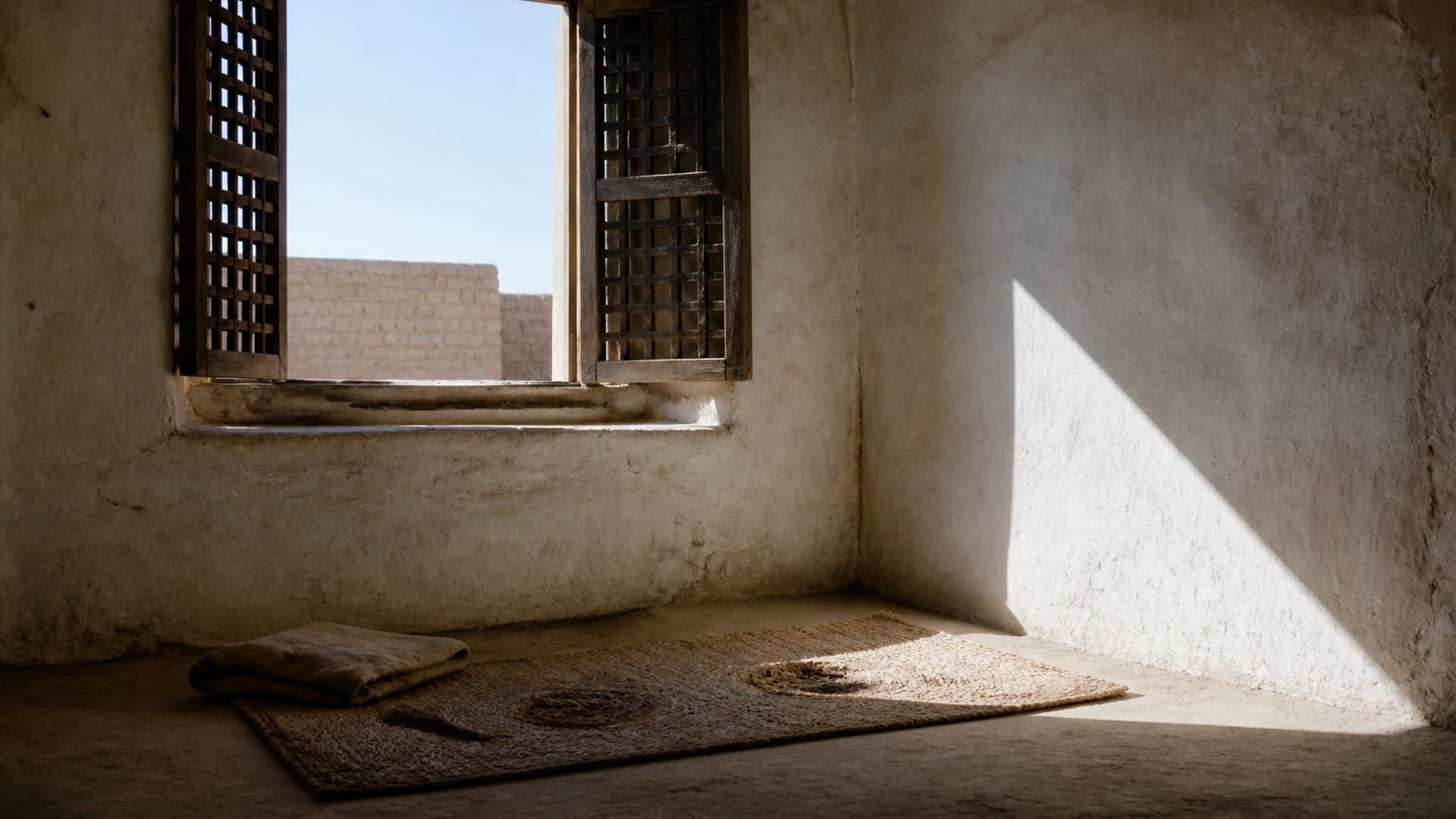
Now when Daniel learned that the document had been signed, he went into his house, where the windows of his upper room opened toward Jerusalem, and three times a day he got down on his knees, prayed, and gave thanks to his God, just as he had done before.
The drama of Daniel 6 is usually located in the den. The lions, the sealed stone, the king who cannot sleep. But the decisive sentence comes earlier, and it is almost boring. Daniel hears that prayer to anyone but the king is now punishable by death, and he goes home and does what he always did.
He does not organize a protest. He does not close the shutters and pray in the dark. He does not go anywhere new. The last six words of the verse carry the weight: just as he had done before.
The only charge they could find
The plot against Daniel only works because of who he already was.
His rivals begin by looking for corruption in his work, and they come up empty. The text says they “could find no charge or corruption, because he was trustworthy.” So they change strategy. “We will never find any charge against this Daniel unless we find something against him concerning the law of his God.”
Think about what that requires. They had to know his habits well enough to write a law around them. They were confident he would pray, confident he would not stop for thirty days, and confident about where to find him when he did. His integrity at work and his faithfulness at home were both so consistent that his enemies could plan on them.
That is an odd kind of compliment, and a real one.
Before the crisis
The phrase at the end of verse 10 points backward. Whatever Daniel did that day, he had been doing for a long time. We are not told when the habit began. We do know he had been taken to Babylon as a young man and served there through several kings, so by the time of Darius he was not young.
This changes how the story reads. The moment we admire was not a sudden surge of courage. It was a practice that had been laid down through years of unremarkable days that nobody bothered to record, and when the pressure came, the practice simply held.
Most of us hope that if a real test arrives we will rise to it. Daniel 6 suggests something less flattering and more useful. People under pressure tend to do what they have already been doing. The time to build the habit is before anyone is watching for it.
Windows toward Jerusalem
The open windows can look like defiance, a man making sure the spies can see him. The text does not frame it that way. It says this was his custom, which means closing them would have been the change.
The direction matters more than the visibility. When Solomon dedicated the temple, he prayed that if Israel was ever carried off to a foreign land and the people prayed “in the direction of the land that You gave to their fathers, the city You have chosen, and the house I have built for Your Name,” God would hear from heaven. Daniel’s practice likely reflects that prayer. In the first year of Darius, Daniel himself describes Jerusalem as a desolation (Daniel 9:2). He was turning toward a ruined city he had not seen since his youth, because God had once promised to listen to exiles who did exactly that.
Thanks, under a death sentence
It is easy to skip one word in the verse. He prayed, and he gave thanks.
The law had just been signed. Daniel knew what it meant. And the habit he returned to was not only asking for help, though the next verse says his enemies found him “petitioning and imploring his God.” It also included gratitude, and the decree did not cancel it. The habit was bigger than the emergency.
For today
The practical application here is not heroic. It is small and a little plain.
Pick a place. Pick a time, or two, or three. Keep them when nothing is wrong, so that they are already there when something is. The habit does not earn anything from God and it guarantees nothing about outcomes; Daniel’s friends in chapter 3 had already said God might not rescue them. What the habit does is make you the kind of person who knows where to go.
When the document is signed, whatever form that takes for you, you will probably do what you have been doing. It is worth thinking about what that is.
For reflection
- If pressure came tomorrow, what in my ordinary week would still be standing?
- Is there one small, fixed practice of prayer I could begin now, while nothing much is at stake?
Prayer
Lord, I would like to be brave when it matters. Teach me to be faithful when it does not seem to.
Give me a place and an hour, and keep me coming back to them.
Amen.
Daniel did not decide to be faithful on the day of the decree. He had been deciding it three times a day for years.
Sources and notes
Consulted while writing this piece. Nothing is listed here that was not used.
Scripture in English is from the Berean Standard Bible, placed in the public domain by its publisher on 30 April 2023.