
Devotional
Blessed Before It Shows
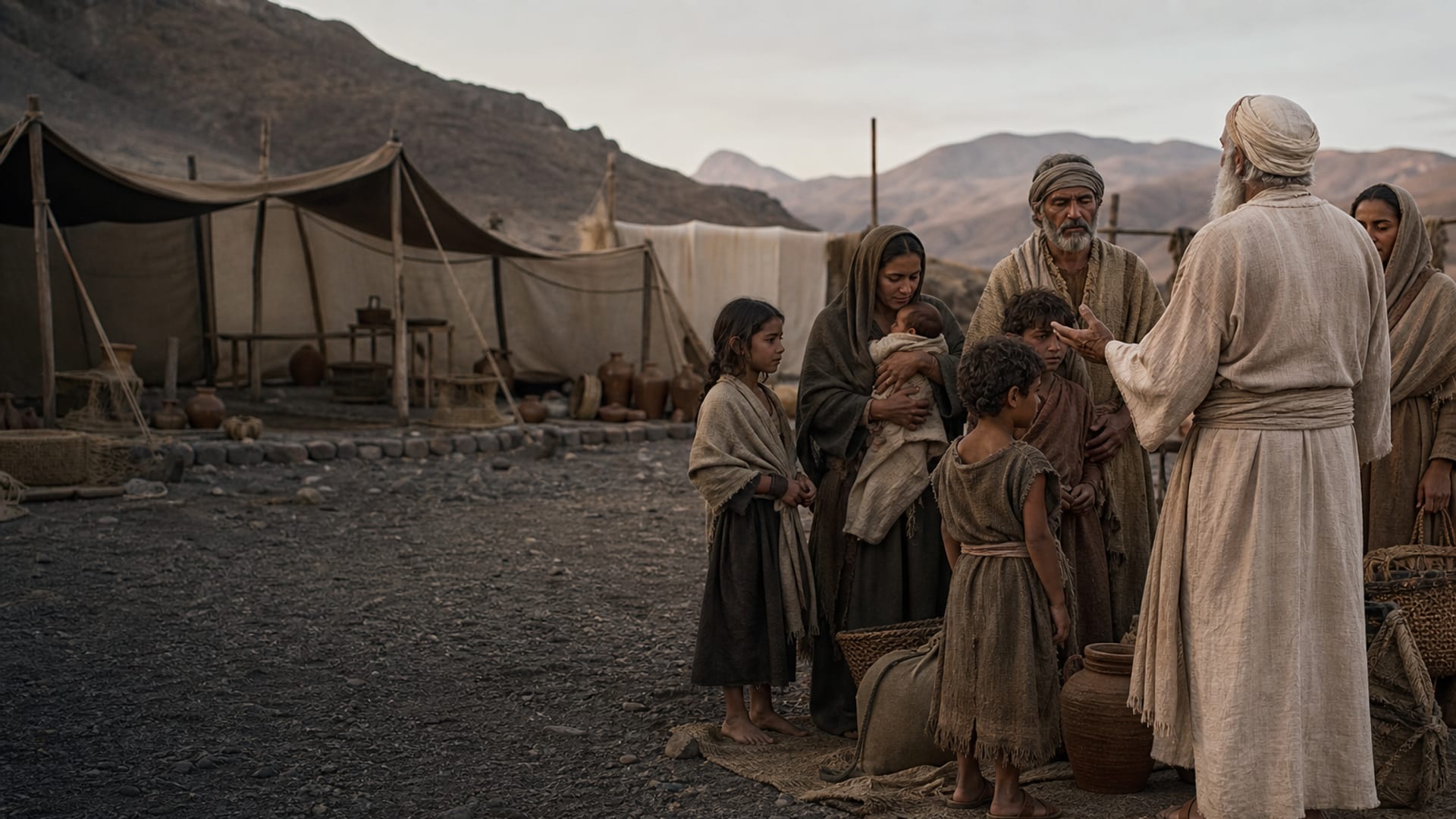
In the wilderness, Aaron’s words were more than a hopeful wish. The Lord placed His name on people who could not yet see much security.
Scripture Numbers 6:22–27 · Numbers 6:1–21
Numbers 6 does not begin with the priestly blessing. It begins with a vow.
For twenty-one verses the chapter follows the Nazirite, a man or woman set apart to the Lord for a season. The vow reaches ordinary life: food and drink, what happens if death suddenly comes near, and the offerings brought when the time is complete. One sentence gathers the meaning of the whole practice: “Throughout the time of his separation, he is holy to the LORD.”
Then the focus widens. The Lord tells Moses to speak to Aaron and his sons: “This is how you are to bless the Israelites. Say to them:” The blessing is placed in the mouth of the priests for Israel, not in the mouth of the Nazirite at the end of an impressive season of devotion.
That movement matters. The vow was for a man or woman who chose it. The blessing was spoken over the whole people, who all still needed the Lord’s face.
In the wilderness
Numbers places this blessing inside Israel’s wilderness story, before settled fields and city gates, before the people have much visible security to point to. They have the presence of the Lord in the Tent of Meeting, the word given through Moses, and the promise of where He is taking them. That is not little. It is also not the kind of security a human heart can count with its fingers.
The blessing begins with keeping: “May the LORD bless you and keep you;” The word bless is wide, but the line does not leave blessing vague. To be blessed is also to be kept. Israel will need more than supplies. They will need the Lord to guard and preserve them, because wilderness exposes what settled life can hide.
The second line turns toward God’s face: “may the LORD cause His face to shine upon you and be gracious to you;” A shining face is the opposite of hidden anger or cold absence. It is personal favor. It is the Lord looking toward His people with grace before they have done enough to steady themselves.
The third line says, “may the LORD lift up His countenance toward you and give you peace.” Peace here is not an escape from the desert. It is a gift from the Lord in the desert. Israel will still have to walk. They will still know hunger, fatigue, and fear as conflicts arise. Yet the blessing teaches them to receive peace as something God gives, rather than something circumstances finally permit.
The name on the people
In ordinary speech, may can sound fragile. May things go well. May you be safe. May you find peace. We use words like that when we care, and also when we cannot do much more than care.
The priestly blessing sounds like that at first, but the last verse changes the weight of it: “So they shall put My name on the Israelites, and I will bless them.” Aaron and his sons speak. The Lord blesses. The priests do not create the blessing by force of office or feeling. They put God’s name where He tells them to put it, and God joins His own promise to their words.
To have the Lord’s name placed on them means the blessing is deeper than the mood of the day. Israel may wake to dust, heat, and the same uncertain ground as yesterday. They may look around and see no walls, no harvested barns, no map with every danger circled. Still, the name has been spoken over them. The Lord has identified them as His people and committed Himself to bless.
That is why the blessing can be received before it is felt. It is given before it is proved by improved circumstances. In fact, it is given precisely to people whose circumstances require faith.
Many Christians hear these words at the end of worship. Sometimes we are already reaching for our keys, thinking about lunch, work waiting for Monday, or a difficult conversation at home. A benediction can pass over us like closing music. Numbers 6 asks us to hear it differently. It is an appointed word for people who are often still in the wilderness when they leave the gathered church.
There are weeks when the blessing feels almost mismatched to life. Kept, after a fearful diagnosis. Grace, after a failure you cannot easily repair. Peace, when your house is tense and sleep has been thin. The text does not ask you to pretend those things are small. It gives you a stronger place to stand than your ability to read the week accurately.
For those who belong to God through Christ, the blessing is more than decoration laid on top of life. It is the name of God placed over you before the wilderness has changed.
For reflection
- Where am I measuring the Lord’s blessing only by visible security, such as money, health, or calm at home?
- When I hear a benediction or read Numbers 6 this week, can I receive God’s word before my circumstances confirm it?
Prayer
Lord, teach me to receive Your blessing before I can see its shape.
Keep me in the wilderness, with Your face turned toward me.
Amen.
The priestly blessing is God’s name placed on His people before their circumstances have begun to look blessed.
Sources and notes
Consulted while writing this piece. Nothing is listed here that was not used.
- Berean Standard Bible, Numbers 6:22–27 primary text
Scripture in English is from the Berean Standard Bible, placed in the public domain by its publisher on 30 April 2023.